

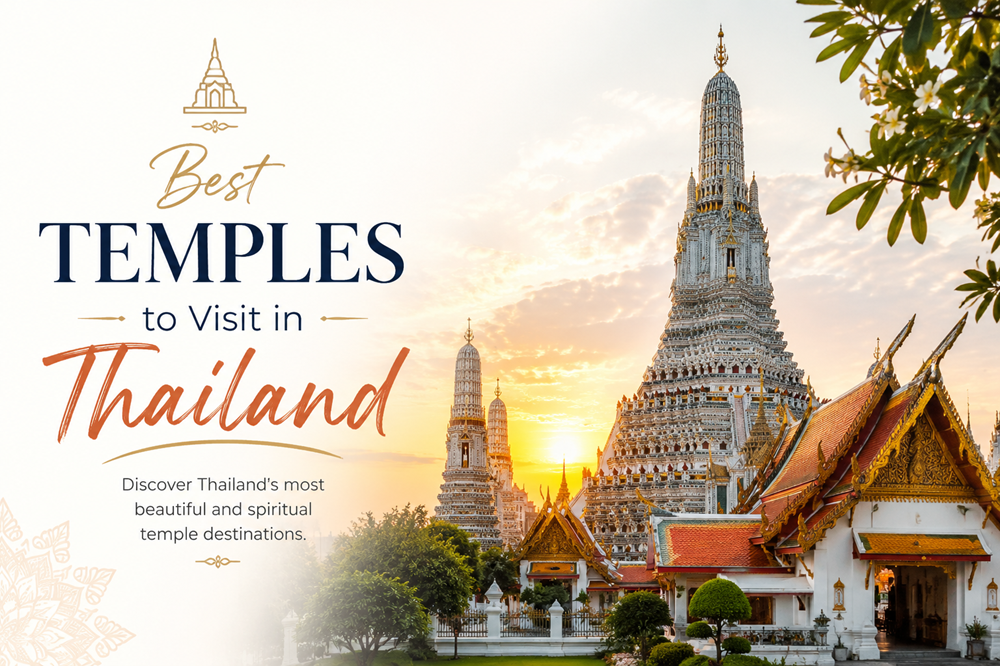
Thailand is home to over 40,000 temples, so "which ones should I actually visit" is a fair question — you can't see them all, and honestly, you shouldn't try. A handful of well-chosen temples, given real time rather than rushed photo stops, tells you far more about Thai culture than checking a long list.
Quick Answer: The must-visit temples in Thailand are Wat Pho and Wat Arun in Bangkok (Reclining Buddha and Temple of Dawn), the Grand Palace complex (home of the Emerald Buddha), and in Chiang Mai, Wat Phra That Doi Suthep (mountaintop views) and Wat Chedi Luang (ancient ruins). Most charge a modest 20-50 THB entry fee, and early morning (6:30-9 AM) is the best time to visit to beat both the heat and the tour buses.
Best Temples in Bangkok
1. Wat Pho (Temple of the Reclining Buddha)
Home to Thailand's largest collection of Buddha images — over 1,000 gathered from ancient ruins across the country. The temple complex also houses Thailand's first university, established to preserve traditional Thai medicine, and its massage school still operates today. If you only have time for one Bangkok temple, this is consistently the top recommendation.
2. Wat Phra Kaew & The Grand Palace (Temple of the Emerald Buddha)
Located within the Grand Palace grounds, this is one of Thailand's most revered religious sites. The Emerald Buddha itself is carved from a single block of jade and carries centuries of history — it traveled from Chiang Mai to Laos before being brought back to Thailand. Expect the biggest crowds here of any Bangkok temple, given its status and location inside the Grand Palace complex.
3. Wat Arun (Temple of Dawn)
Set on the west bank of the Chao Phraya River in Thonburi, Wat Arun is instantly recognizable by its towering, intricately decorated spire. It dates back to the Ayutthaya period, and legend has it that King Taksin named it after arriving at dawn following a battle. The river-facing location makes it one of the most photogenic temples in the country, especially at sunset from the opposite bank.
4. Wat Benchamabophit (The Marble Temple)
Completed in 1911, this is considered the finest example of modern Thai religious architecture, built with imported Italian Carrara marble that gives it a distinct glow in morning light. The gallery behind the main chapel holds 52 Buddha images in different styles from across Asia — worth lingering over if you're interested in Buddhist iconography. Entry is a modest 20 THB.
Best Temples in Chiang Mai
Chiang Mai is often called Thailand's temple capital, with roughly 300 active wats in and around the city, most of them concentrated in the walkable Old City.
1. Wat Phra That Doi Suthep
The most visited temple in the Chiang Mai area, perched on a mountain above the city with sweeping views. Its golden chedi is one of the most recognizable images of Northern Thailand. Getting there requires a short trip outside the city, but it's consistently ranked as the top must-see in the region.
2. Wat Chedi Luang
Located inside the Old City walls, the standout feature here is a massive, time-worn chedi that dominates the courtyard — genuinely ancient ruins rather than a restored replica, which gives it a different feel from Bangkok's more polished temples.
3. Wat Phra Singh
One of the most beautiful and important temples in the city, frequently mentioned alongside Chiang Mai's other top sites for its architecture and central location within the Old City.
4. Wat Pha Lat
A hidden favorite for travelers who want something off the main circuit. It's nestled in the jungle on Doi Suthep Mountain, reached via a roughly 40-minute hike known as the Monk's Trail, lined with orange robes marking the path. The reward is a quiet temple surrounded by greenery, with none of the crowds of its more famous mountaintop neighbor.
5. Wat Umong Suan Phutthatham
An unusual forest temple with underground tunnels and chambers, offering a completely different experience from the golden spires most people picture when they think of Thai temples.
Temple Etiquette: What to Know Before You Go
Thai temples are active spiritual spaces, not museums, and a few customs matter:
- Dress modestly — shoulders and knees covered is the standard expectation at most major temples.
- Remove your shoes before entering temple buildings — you'll be doing this often, so slip-on shoes make life easier.
- Never point your feet toward a Buddha statue or a monk — feet are considered the lowest, least respectful part of the body in Thai culture.
- The Wai — a small gesture of palms together at chest height with a slight bow — is a polite way to show respect when entering.
- Photography — look for "no photo" signs inside main halls, and avoid photographing people in prayer.
- Digital donations — many major temples now accept QR code "PromptPay" donations alongside the traditional cash offering, useful if you're carrying a Thai bank app or a travel card like Wise.
Best Time to Visit Temples
Early morning — roughly 6:30 to 9:00 AM — is consistently the best window, letting you avoid both the midday heat and the tour bus crowds that build up by late morning. Entry fees at most major landmarks run 20-50 THB, and it's worth carrying small cash, since many temples still don't accept cards for entry.
FAQs
Q: What is the most famous temple in Thailand? A: Wat Phra Kaew (Temple of the Emerald Buddha), located within Bangkok's Grand Palace complex, is generally considered the most significant and famous temple in the country.
Q: How many days do I need to see Bangkok's temples properly? A: One full day covers the major Bangkok temples (Wat Pho, Wat Phra Kaew, Wat Arun) comfortably if you start early; a second day lets you add Wat Benchamabophit and explore at a slower pace.
Q: Is there an entry fee for Thai temples? A: Most major landmark temples charge a modest 20-50 THB entry fee, while many smaller neighborhood temples are free to enter.
Q: What should I wear to visit temples in Thailand? A: Modest clothing covering shoulders and knees, plus shoes that are easy to slip on and off, since footwear must be removed before entering most temple buildings.
Q: Are Chiang Mai's temples different from Bangkok's? A: Yes — Chiang Mai's temples reflect Lanna architectural style with a more understated, forest-adjacent character, while Bangkok's major temples tend to be grander, more ornate, and tied to royal history.
Want a Thailand itinerary that fits in the right temples without rushing? [Explore Exciting Tales' Thailand packages →